Willesden Lane & Quex Road, London · Mon–Sat
Patient Education

Understanding your treatment

Home / Patient Education
Plain-English Guides

Know what to expect

Good dentistry starts with understanding. These simple guides explain the most common dental problems and treatments in everyday language, so you can feel confident and informed at every appointment.

Tap any topic below to read more. If anything is unclear, just ask your dentist on your next visit.
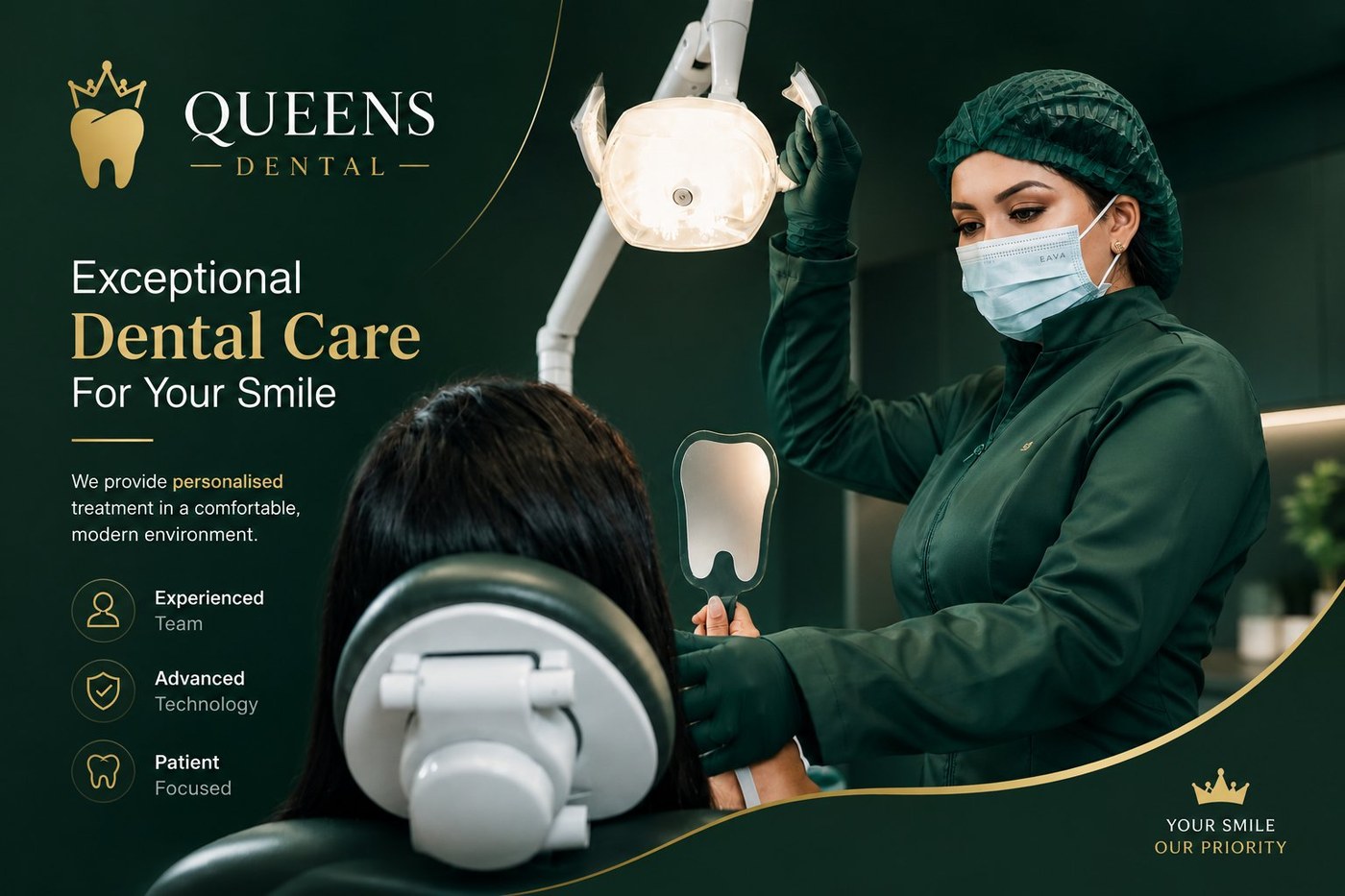
Queens Dental — exceptional, personalised dental care in a comfortable, modern environment
Prevention First

Four habits that protect your smile

Brush Twice Daily

Two minutes, morning and night, with fluoride toothpaste. Spit, don't rinse.

Clean Between Teeth

Floss or use interdental brushes once a day to reach where a brush can't.

Watch the Sugar

Limit sugary food and drink to mealtimes to give teeth time to recover.

Visit Regularly

Routine check-ups catch small problems before they become big ones.

At A Glance

The treatments we offer

A quick visual overview of the care available at the practice.
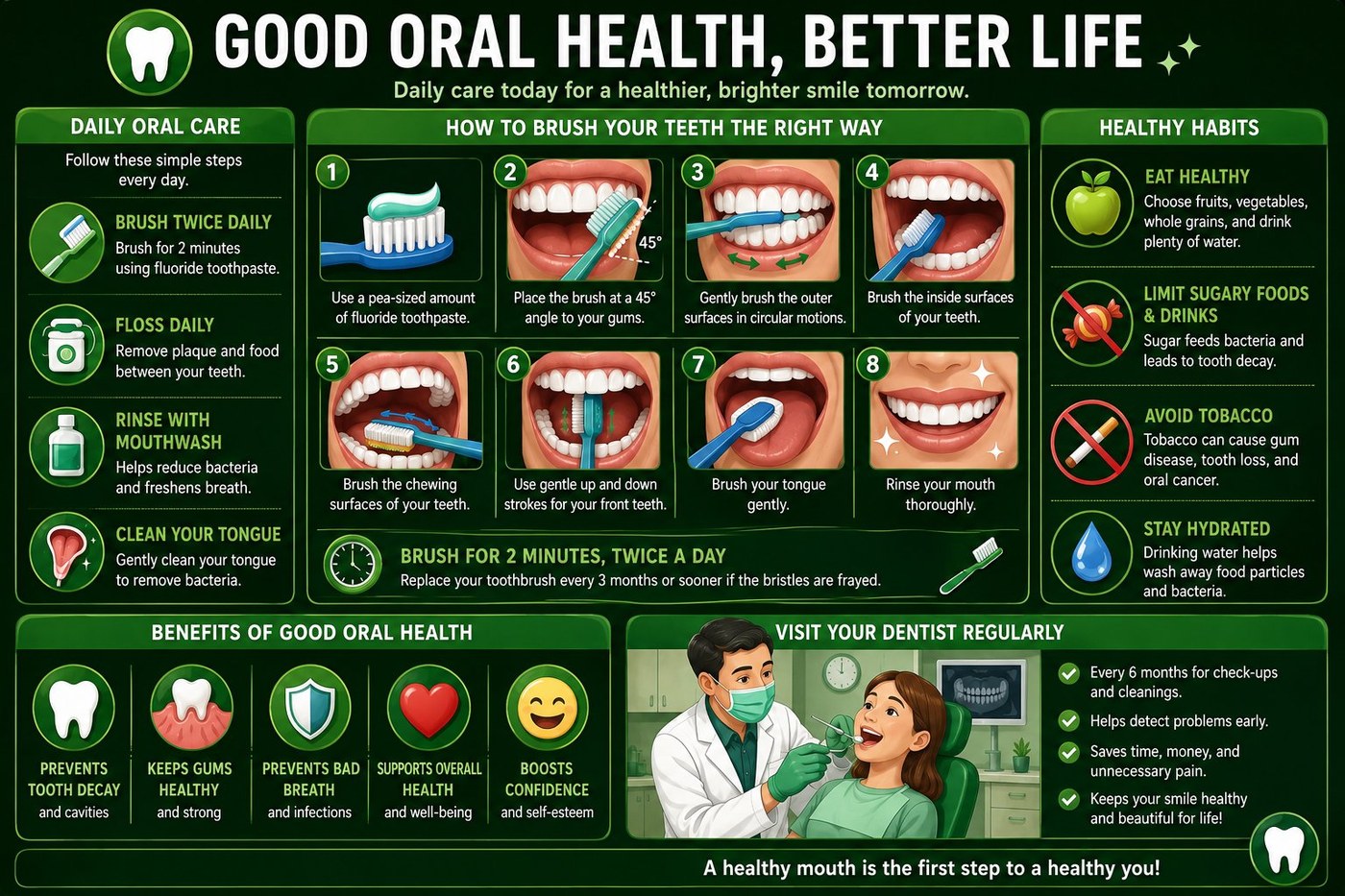
Illustrated overview of dental treatments: check-ups and hygiene, fillings, root canals, extractions, crowns, bridges and dentures, implants, whitening, orthodontics, gum disease treatment and veneers

Common Dental Problems

Tooth decay (cavities) +

Tooth decay happens when bacteria in the mouth turn sugar into acid, which slowly dissolves the hard outer surface of the tooth.
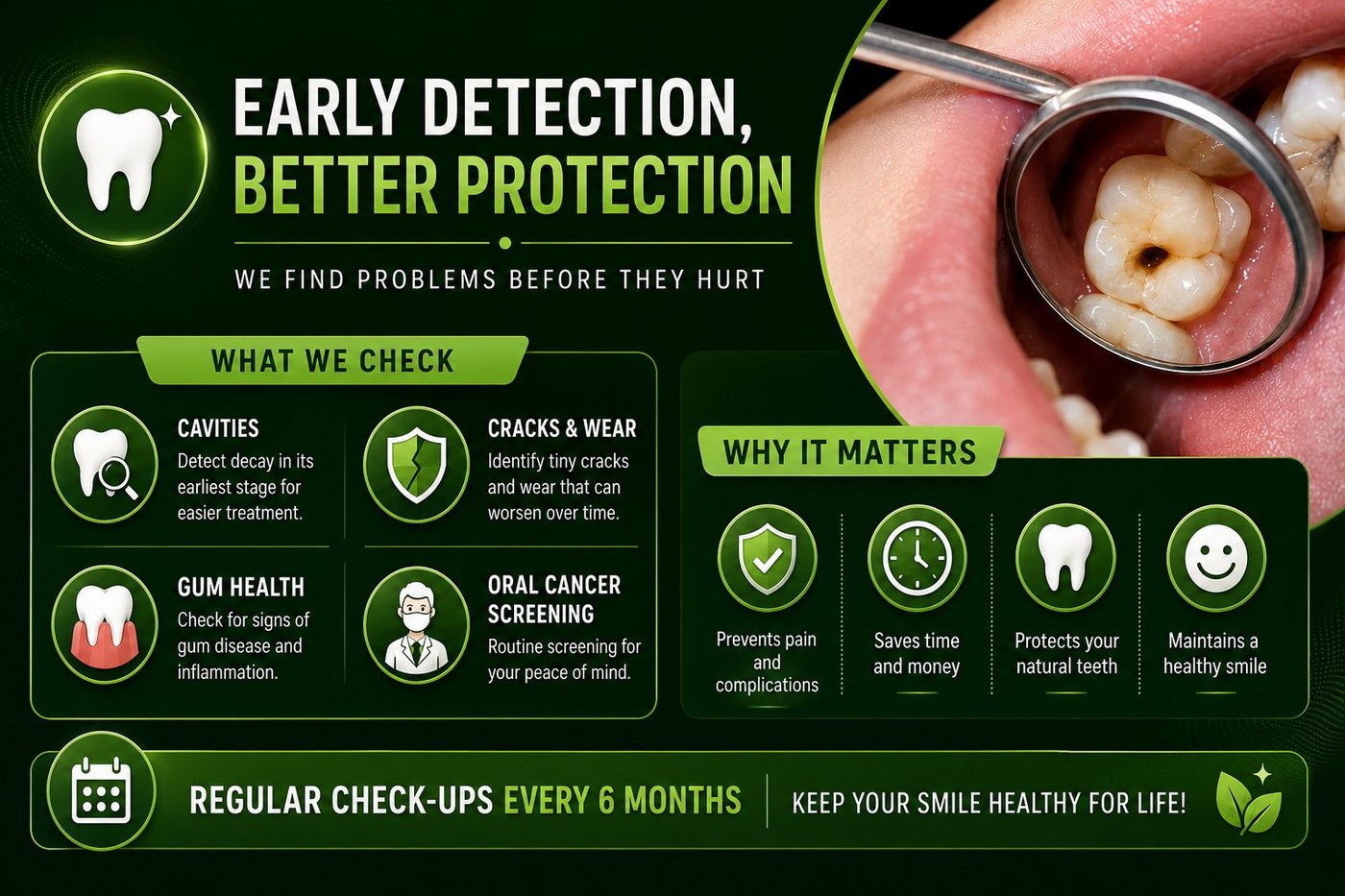
Close-up of tooth decay seen in a dental mirror

What you might notice

  • Sensitivity to hot, cold or sweet things
  • A dull ache or sharp pain
  • A visible hole or dark mark on a tooth

How we treat it

Caught early, a small filling restores the tooth. Larger decay may need a more substantial filling, an inlay or a crown. The earlier it's found, the simpler the fix — which is why regular check-ups matter.

Tooth wear +

Teeth can gradually wear down through grinding, acidic food and drink, or simply over time. Left unchecked, this can make teeth sensitive or change how they look.
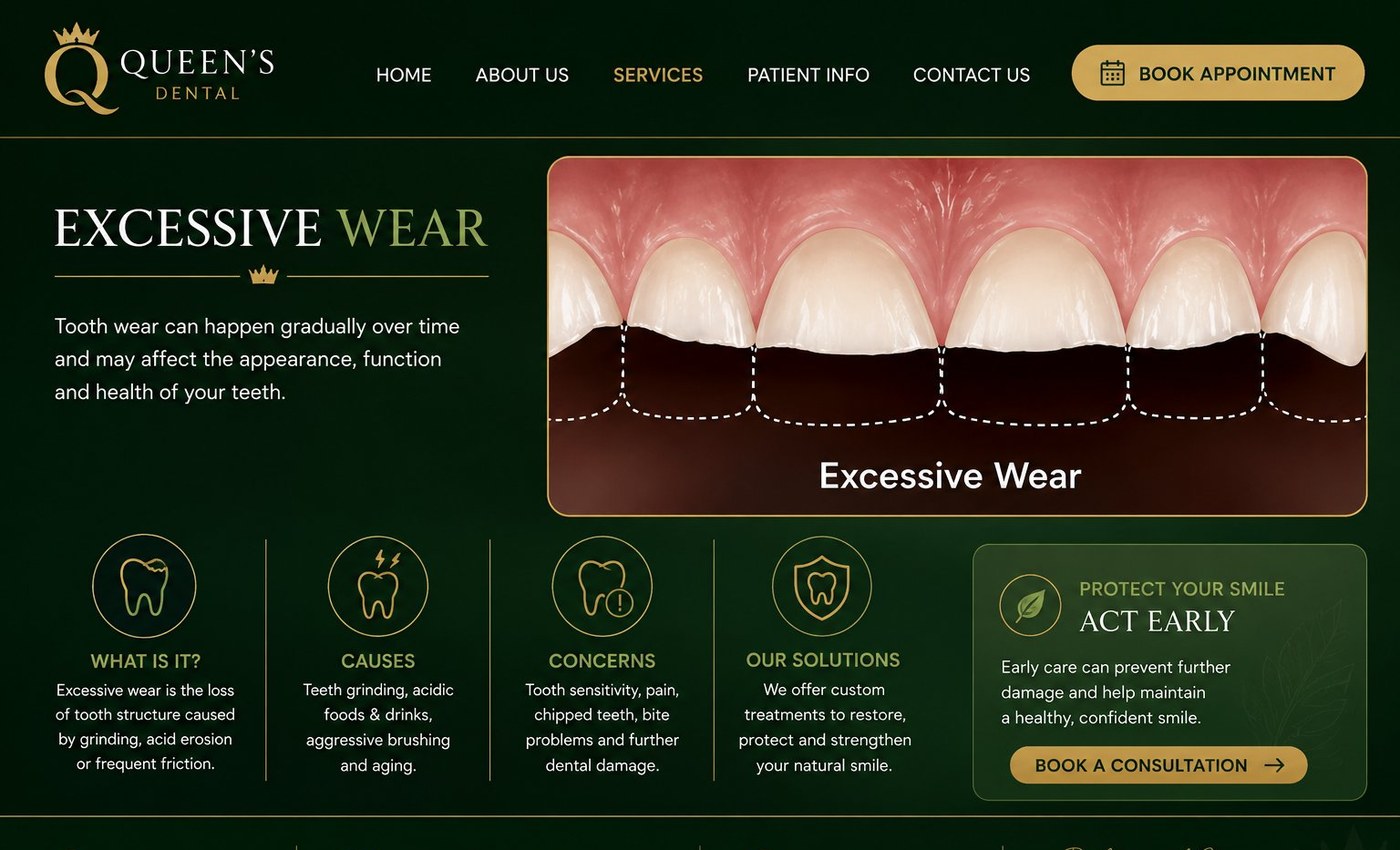
Excessive tooth wear: what it is, its causes, the concerns it raises and how it can be treated

Common causes

  • Grinding or clenching (often during sleep)
  • Acidic foods and drinks
  • Aggressive brushing, and natural ageing

How we help

Caught early, tooth wear can be managed and the tooth protected — from a night guard for grinding to restorations that rebuild worn surfaces. The sooner it's spotted, the more of your natural tooth we can preserve.

White (composite) fillings +

Tooth-coloured composite fillings restore decayed or damaged teeth while blending naturally with your smile.
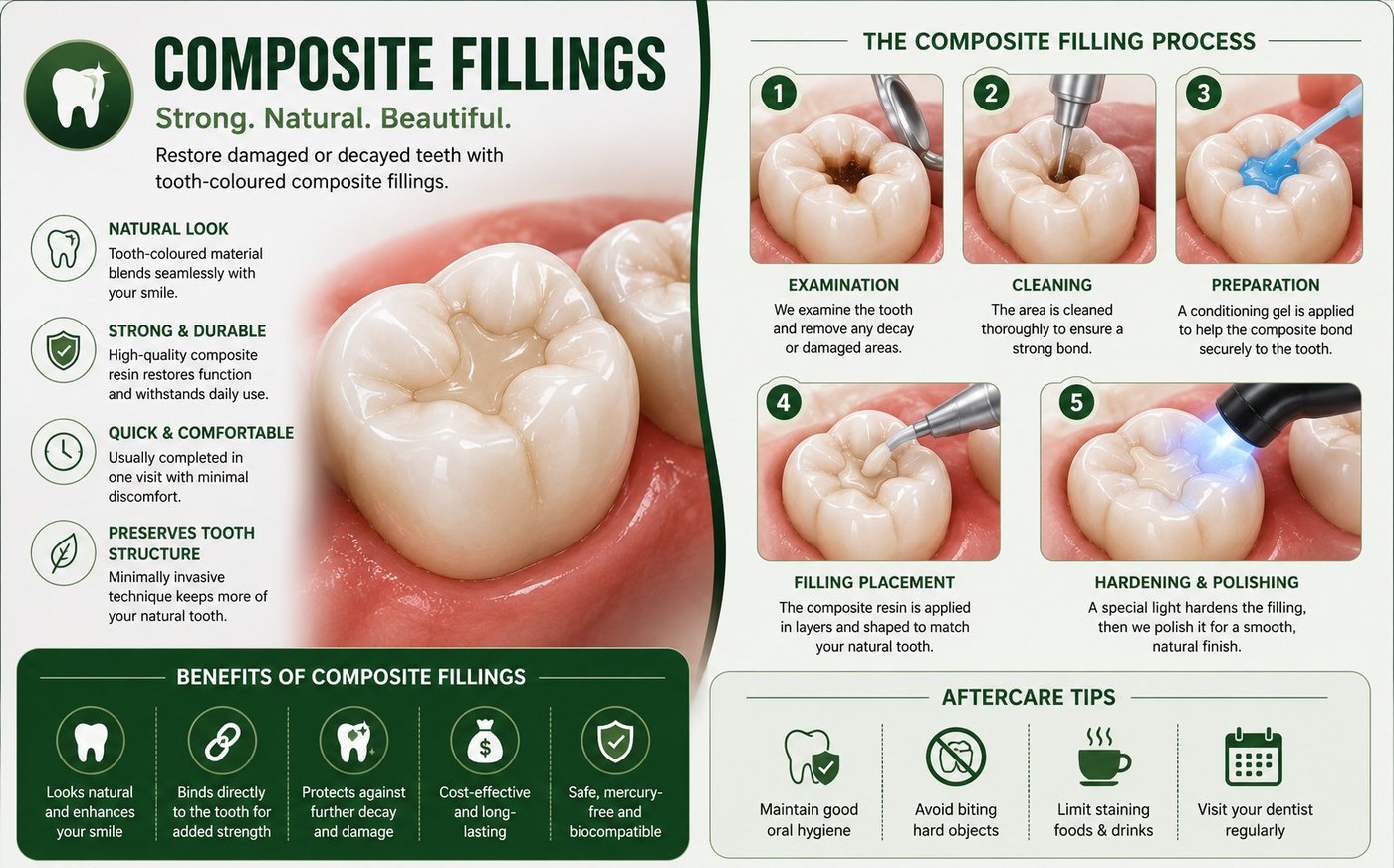
Composite fillings: natural look, the step-by-step process and aftercare tips

Good to know

  • Matched to the colour of your own teeth
  • Usually completed in a single visit
  • Ideal for visible front and back teeth
Silver (amalgam) fillings +

A hard-wearing, long-lasting filling material that has been used safely in dentistry for many decades, often chosen for back teeth.

Good to know

  • Very durable and cost-effective
  • Silver-grey in colour, so more visible than white fillings
  • A reliable option for teeth under heavy chewing pressure
Crowns +

A crown is a custom-made cap that fits over a damaged or weakened tooth, restoring its shape, strength and appearance.
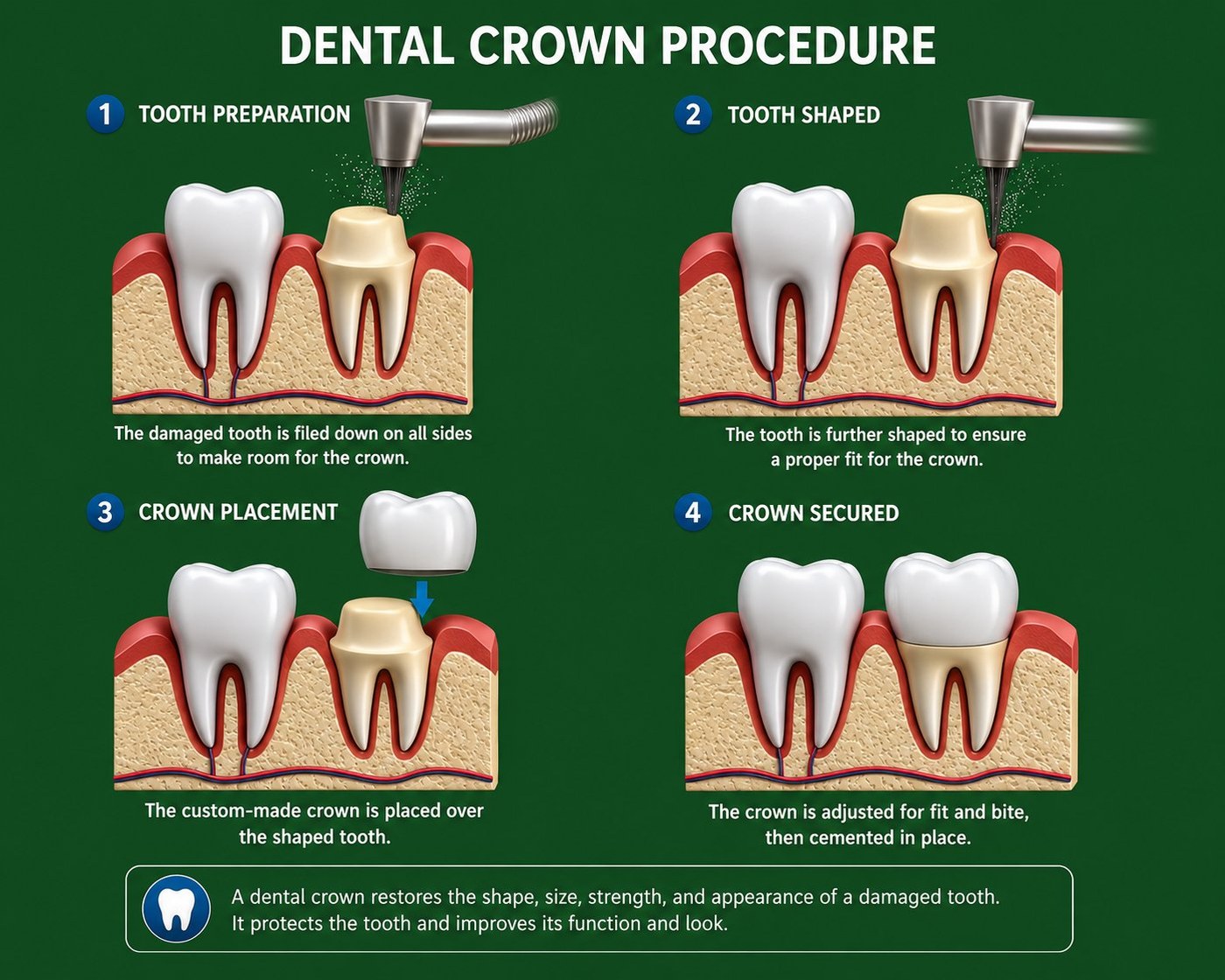
Dental crown procedure: tooth preparation, shaping, crown placement and the crown cemented in place

When a crown helps

  • After root canal treatment
  • To protect a heavily filled or cracked tooth
  • To improve the look of a misshapen tooth

What to expect

The tooth is gently shaped, an impression is taken, and your crown is made to match your other teeth. A temporary crown protects the tooth while the final one is made.

Bridges +

A bridge replaces one or more missing teeth by anchoring a replacement tooth to the healthy teeth on either side of the gap.

Good to know

  • Fills a gap without a removable denture
  • Restores your bite and confidence when smiling
  • Fixed firmly in place — it doesn't come out
Dental implants +

A dental implant is a small titanium post that replaces the root of a missing tooth. Once healed, it holds a natural-looking crown firmly in place.
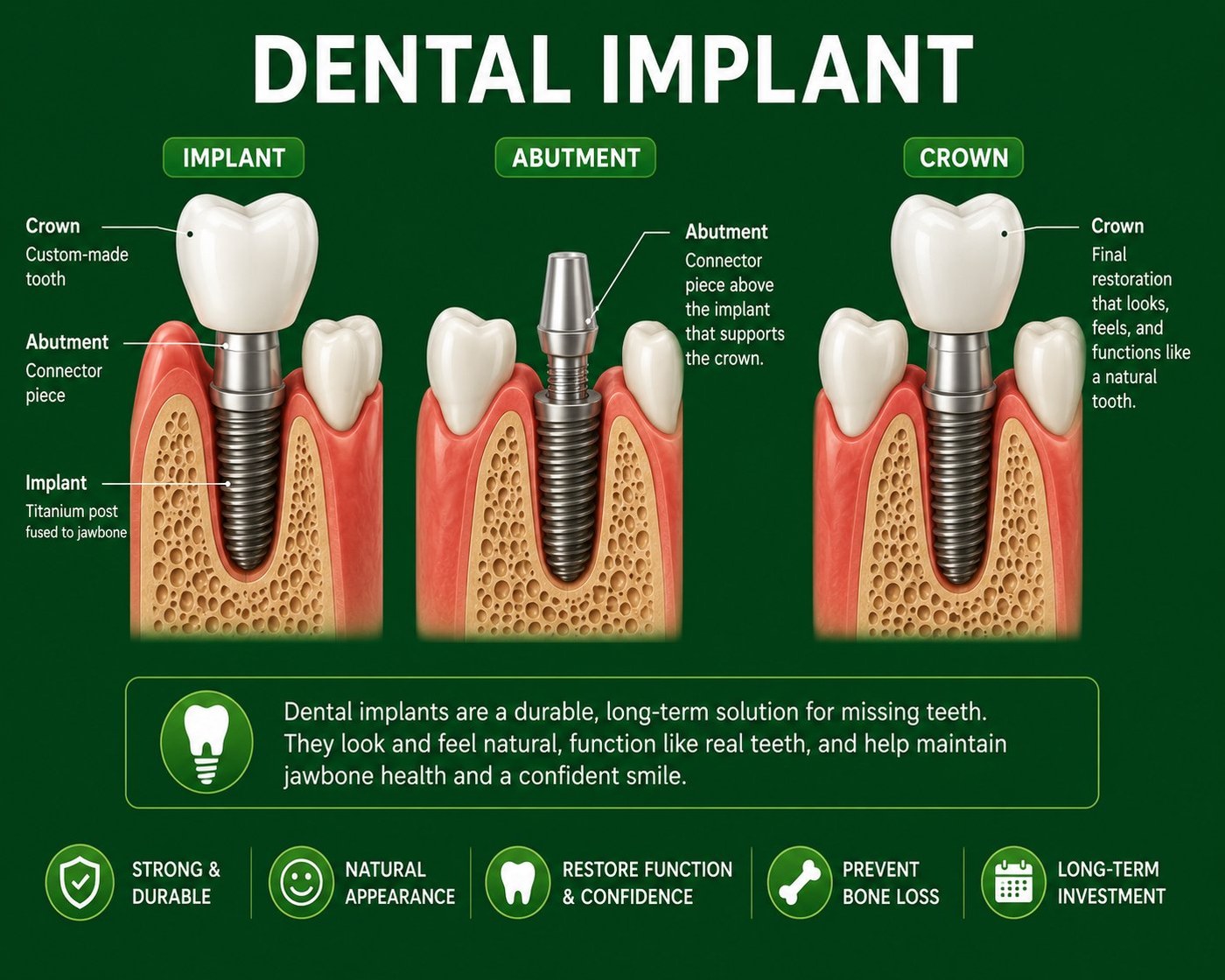
Dental implant stages: the implant post placed in the bone, the abutment fitted, and the crown attached

Why people choose implants

  • The closest thing to a natural tooth
  • Doesn't affect the neighbouring teeth
  • Long-lasting and easy to care for

What to expect

The implant is placed during a straightforward procedure and then left to bond with the bone over a few months. Once settled, your custom crown is attached — restoring both the look and the function of the tooth.

Root canal treatment +

When the soft tissue inside a tooth becomes infected, root canal treatment removes the infection and saves the natural tooth rather than removing it.
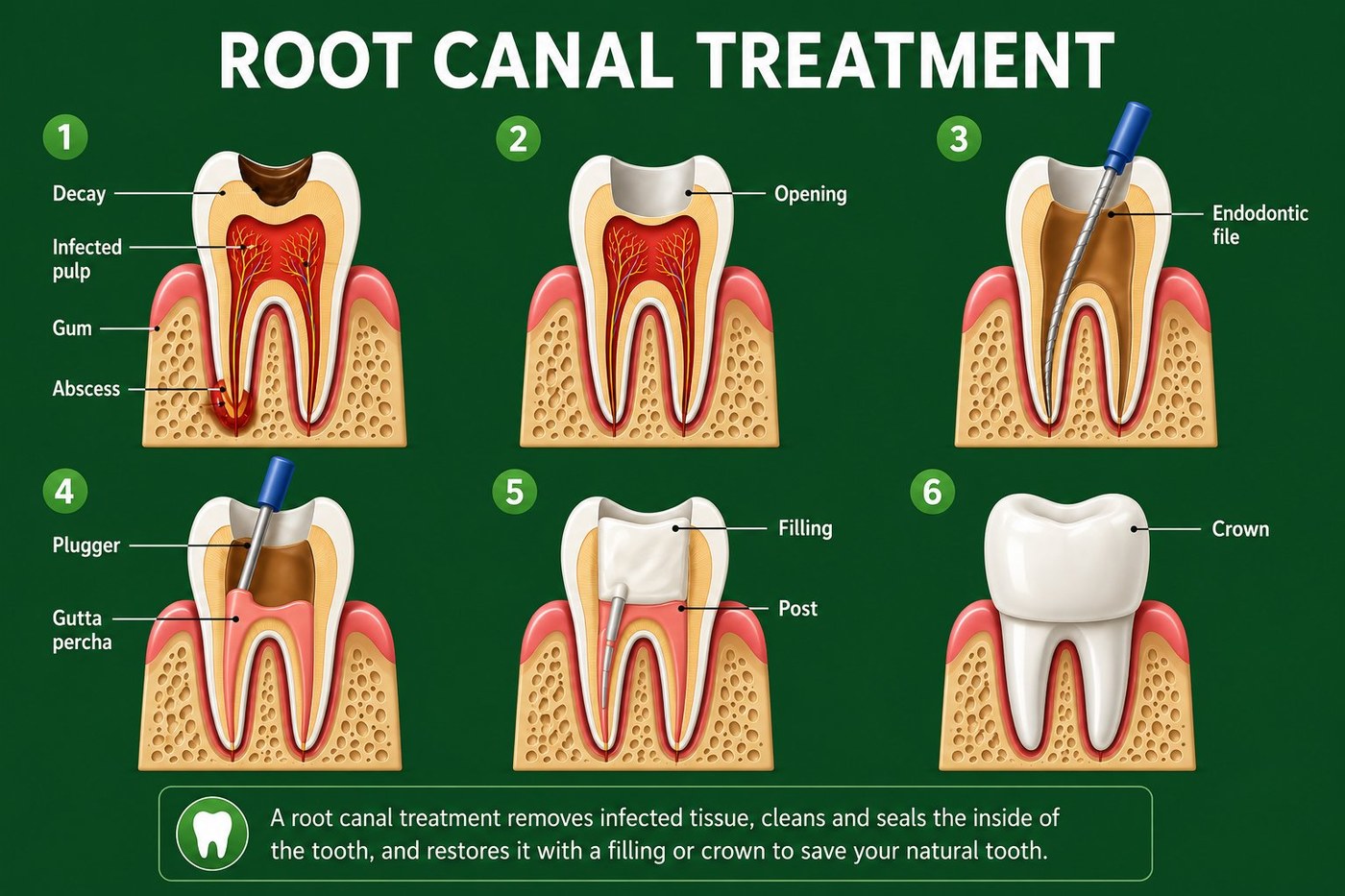
Root canal treatment steps from infected pulp through cleaning, filling and crown

The good news

Modern root canal treatment is carried out under local anaesthetic and is no more uncomfortable than a filling. It relieves pain and lets you keep your own tooth, which is almost always better than losing it.

Inlays & onlays +

A made-to-measure repair, somewhere between a filling and a crown. It restores a larger area of a tooth while keeping as much natural tooth as possible.

Good to know

  • Stronger and longer-lasting than a large filling
  • Custom-made to fit your tooth precisely
  • Can be tooth-coloured for a natural look

Implant Solutions

Dental implants can replace a single tooth, several teeth, or a whole arch. Here are the main options. Your dentist will advise which is right for you after an assessment.
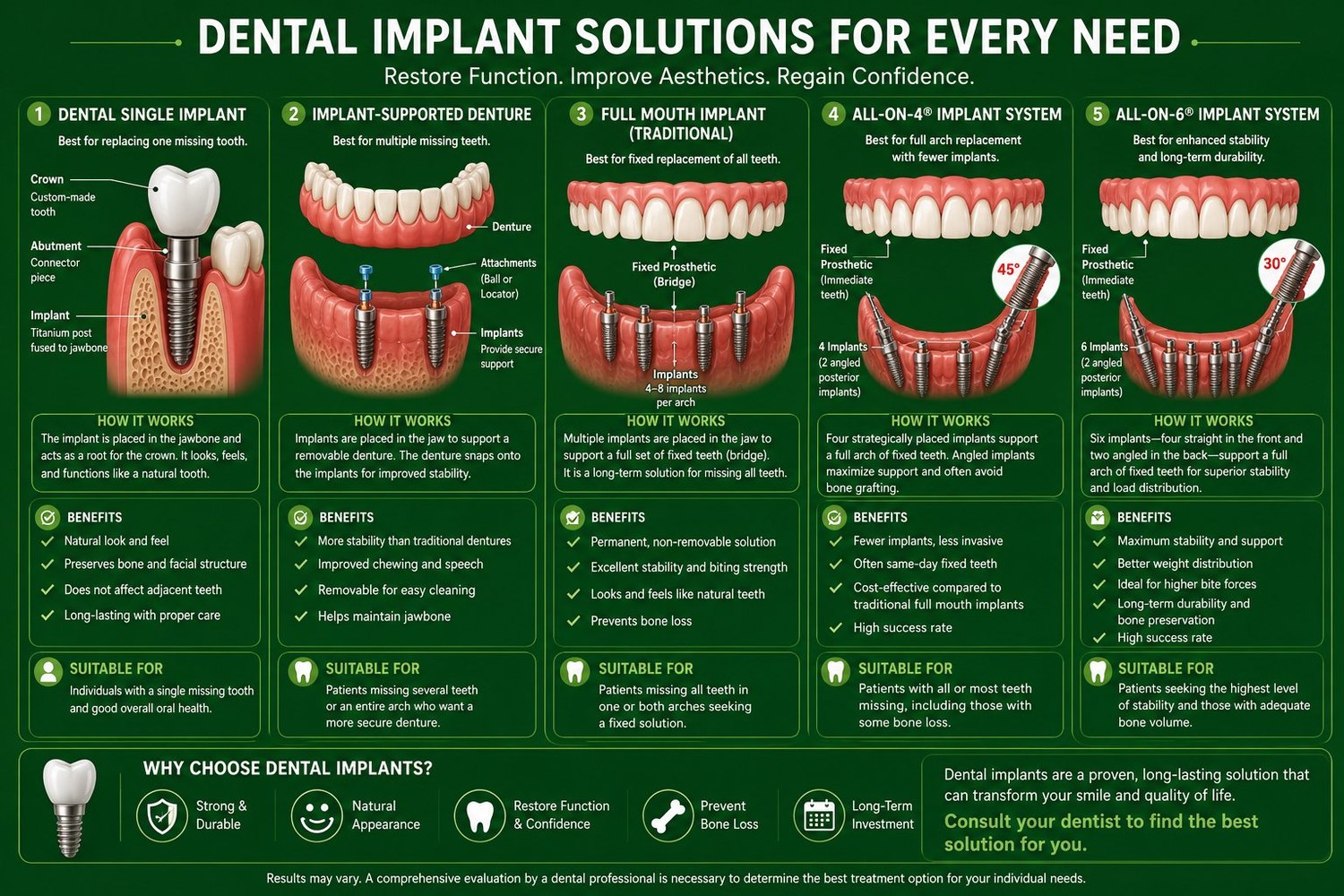
Dental implant solutions for every need: single implant, implant-supported denture, full mouth implant, All-on-4 and All-on-6 systems, with how each works, benefits and who they suit
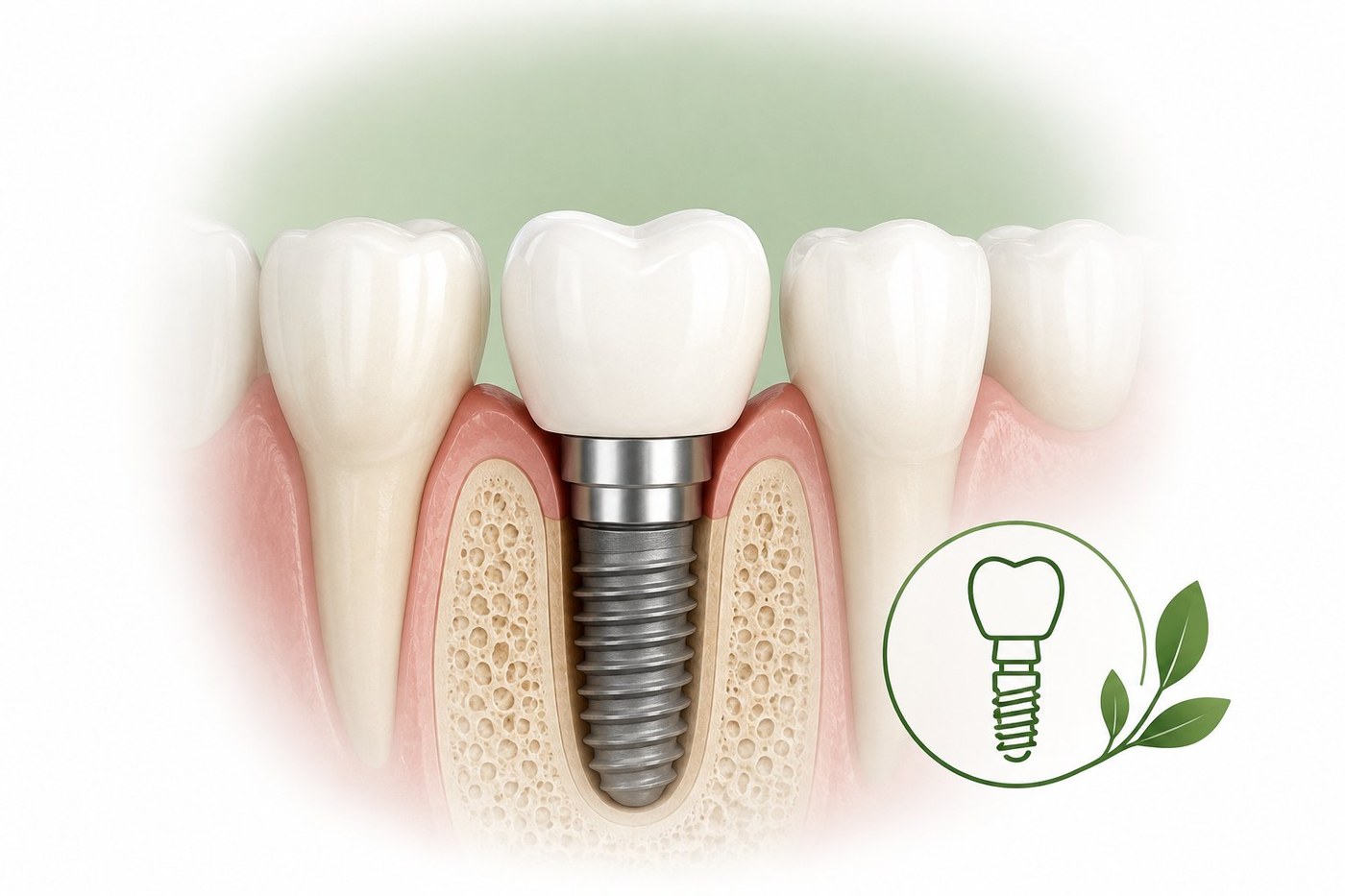
Single dental implant in the jaw supporting a natural-looking crown
1

Single Implant

One missing tooth

A single titanium implant replaces one missing tooth, topped with a natural-looking crown. It stands on its own without affecting the teeth either side.
  • Ideal for one gap
  • Doesn't touch neighbouring teeth
  • Looks and feels like a natural tooth
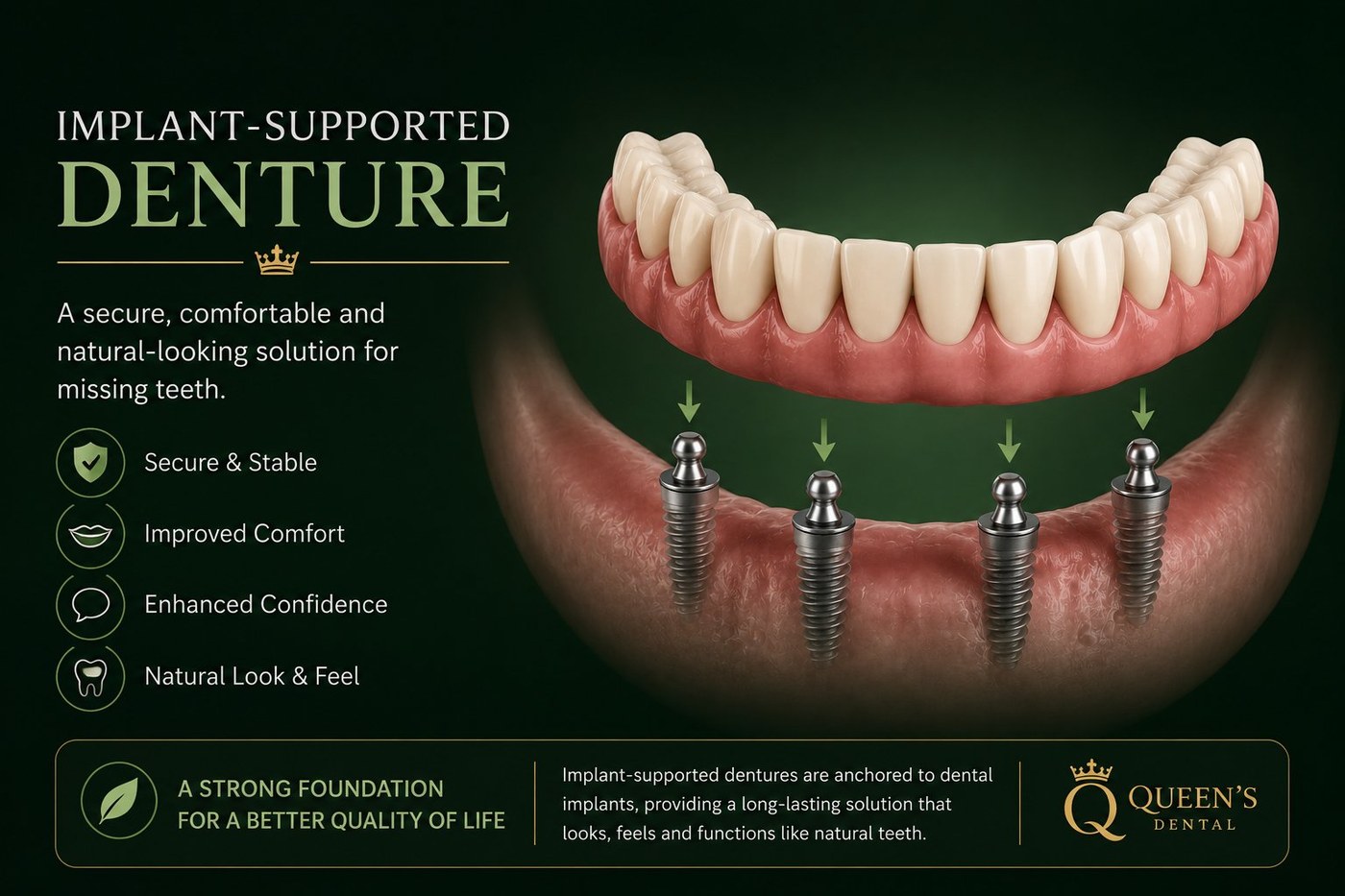
Implant-supported removable denture anchored onto implants in the jaw
2

Implant-Supported Removable Denture

A loose denture, made secure

A small number of implants hold a denture firmly in place. It clips securely on, so it won't slip or click, yet can still be removed for easy cleaning.
  • Far more stable than a normal denture
  • Eat and speak with confidence
  • Removable for cleaning
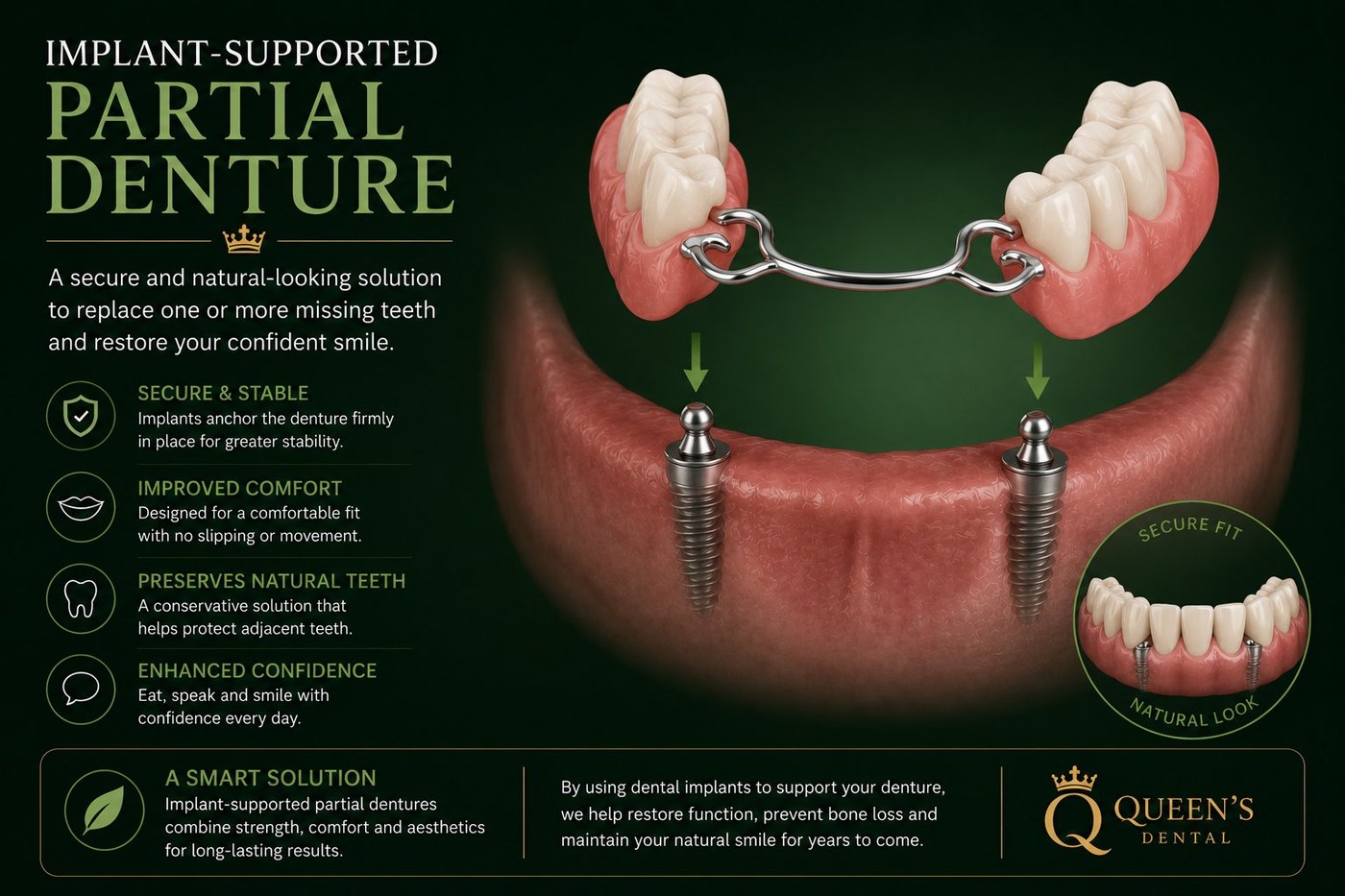
Implant-supported partial denture replacing several missing teeth
3

Implant-Supported Partial Denture

Replacing several teeth

A secure, natural-looking way to replace one or more missing teeth, anchored to implants for greater stability while helping protect your remaining natural teeth.
  • Firmly anchored, no slipping
  • Helps protect adjacent teeth
  • Comfortable, confident everyday use
Full arch of fixed teeth supported on dental implants
+

Full-Mouth Implants

Rebuilding a complete smile

For patients missing most or all of their teeth, a full-mouth implant reconstruction rebuilds the entire upper and lower arches with a fixed, natural-looking set of teeth. The two most common approaches are All-on-4 and All-on-6, described below.

All-on-4 +

A complete fixed set of teeth supported by just four implants per arch.

A popular, efficient way to replace a full upper or lower arch, often in fewer appointments and frequently avoiding the need for bone grafting.

Good to know

  • A whole arch of fixed teeth
  • Fewer implants, faster treatment
  • Fixed in place — not removable
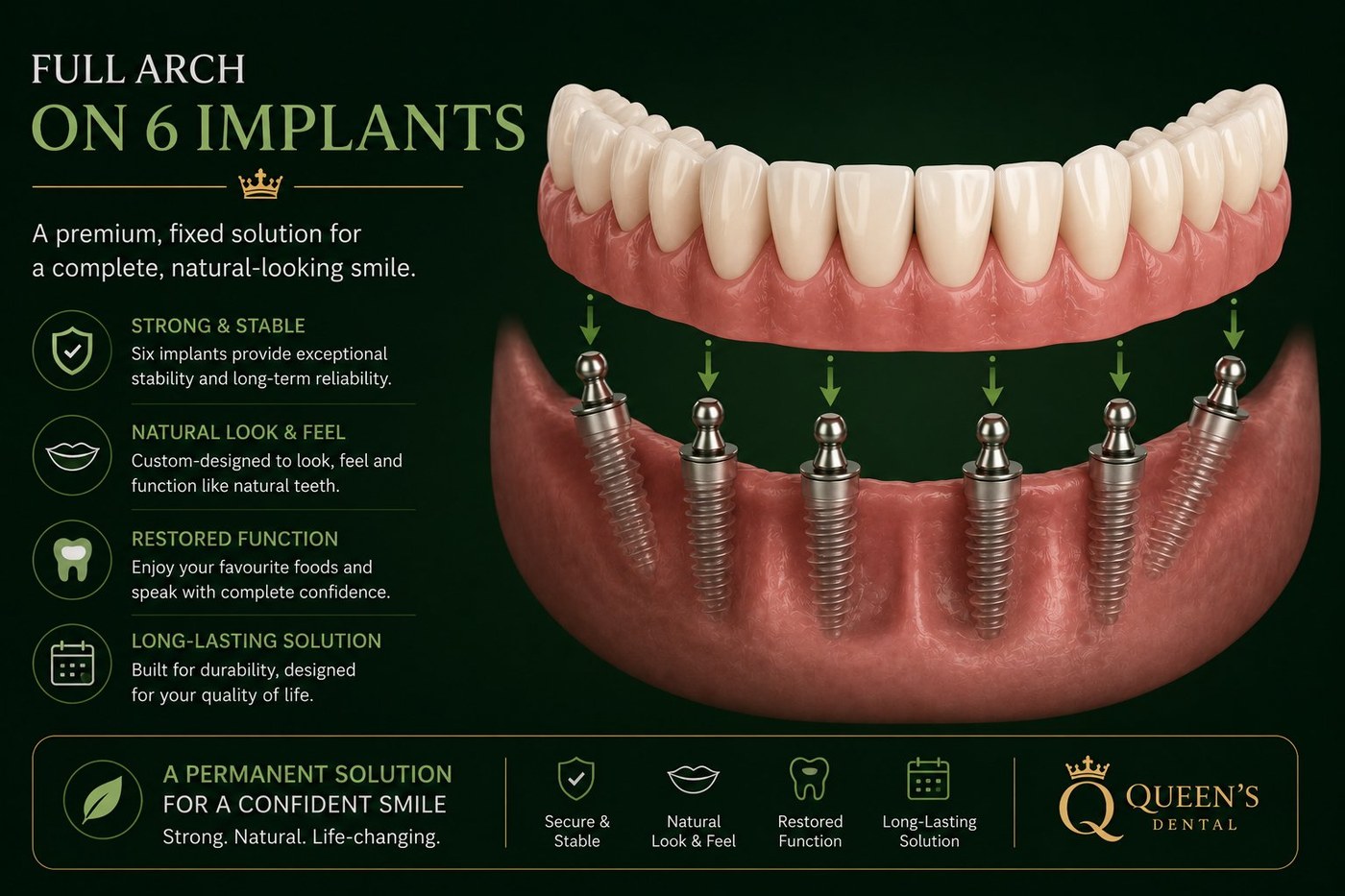
All-on-6 +

Like All-on-4, but using six implants per arch for extra support and stability.

Often recommended where more strength is needed or the jawbone allows for it, spreading the load across more implants for a strong, long-term result.

Good to know

  • Extra stability and support
  • Spreads the load across more implants
  • A strong, long-term full-arch solution

Dentures

Dentures explained +

Dentures are removable replacements for missing teeth. They can replace a few teeth (partial) or a full set (complete), restoring your ability to eat, speak and smile comfortably.
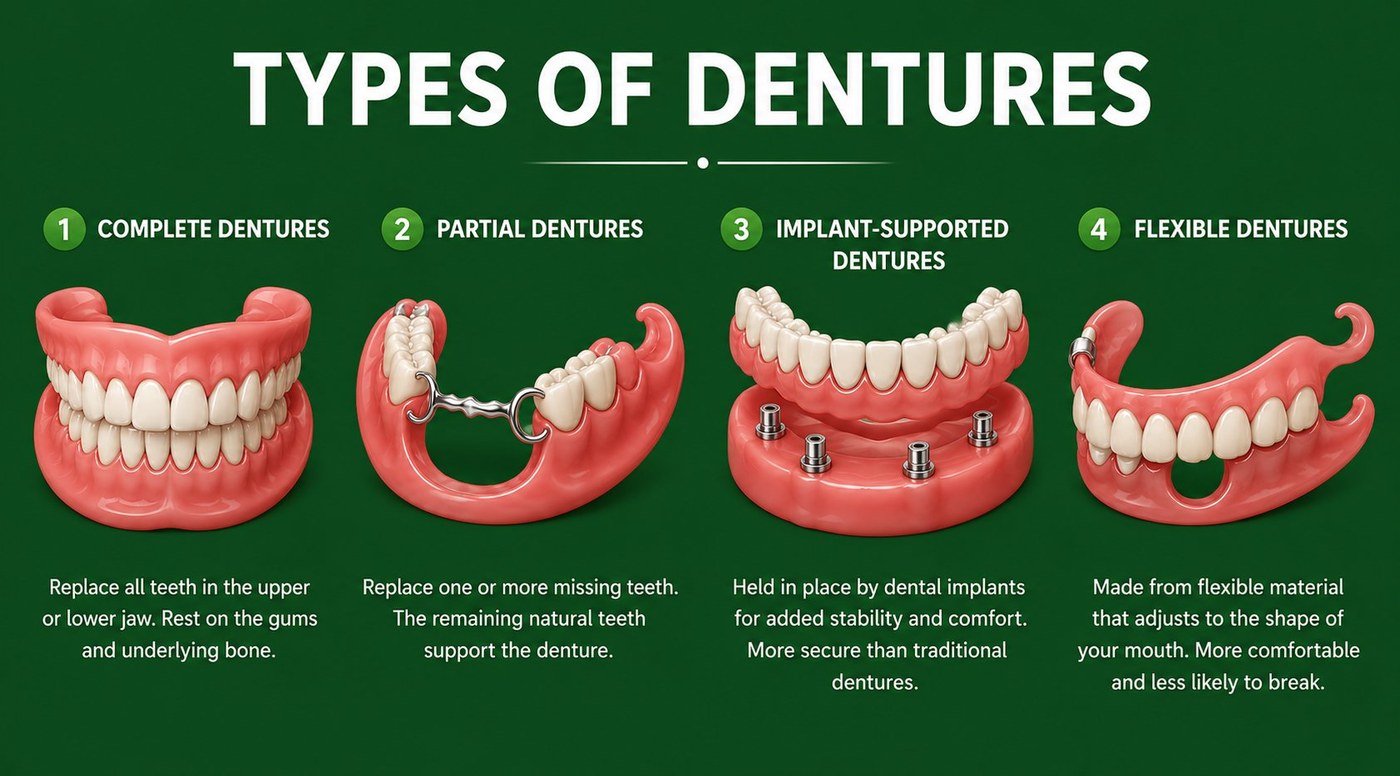
Types of dentures: complete, partial, implant-supported and flexible dentures

Types we offer

  • Acrylic — a comfortable, traditional option
  • Chrome — slimmer and very strong
  • Flexible — lightweight with a natural fit
Looking after your dentures +

A little daily care keeps dentures fresh, comfortable and long-lasting.

Simple routine

  • Clean them over a bowl of water so they don't break if dropped
  • Brush daily with a soft brush and denture cleaner (not toothpaste)
  • Soak overnight to keep them moist
  • Bring them to your check-ups so we can check the fit

Gum Health

Gum disease +

Gum disease is caused by a build-up of plaque along the gum line. In its early stage (gingivitis) it's easily reversed, but if ignored it can affect the bone that holds teeth in place.
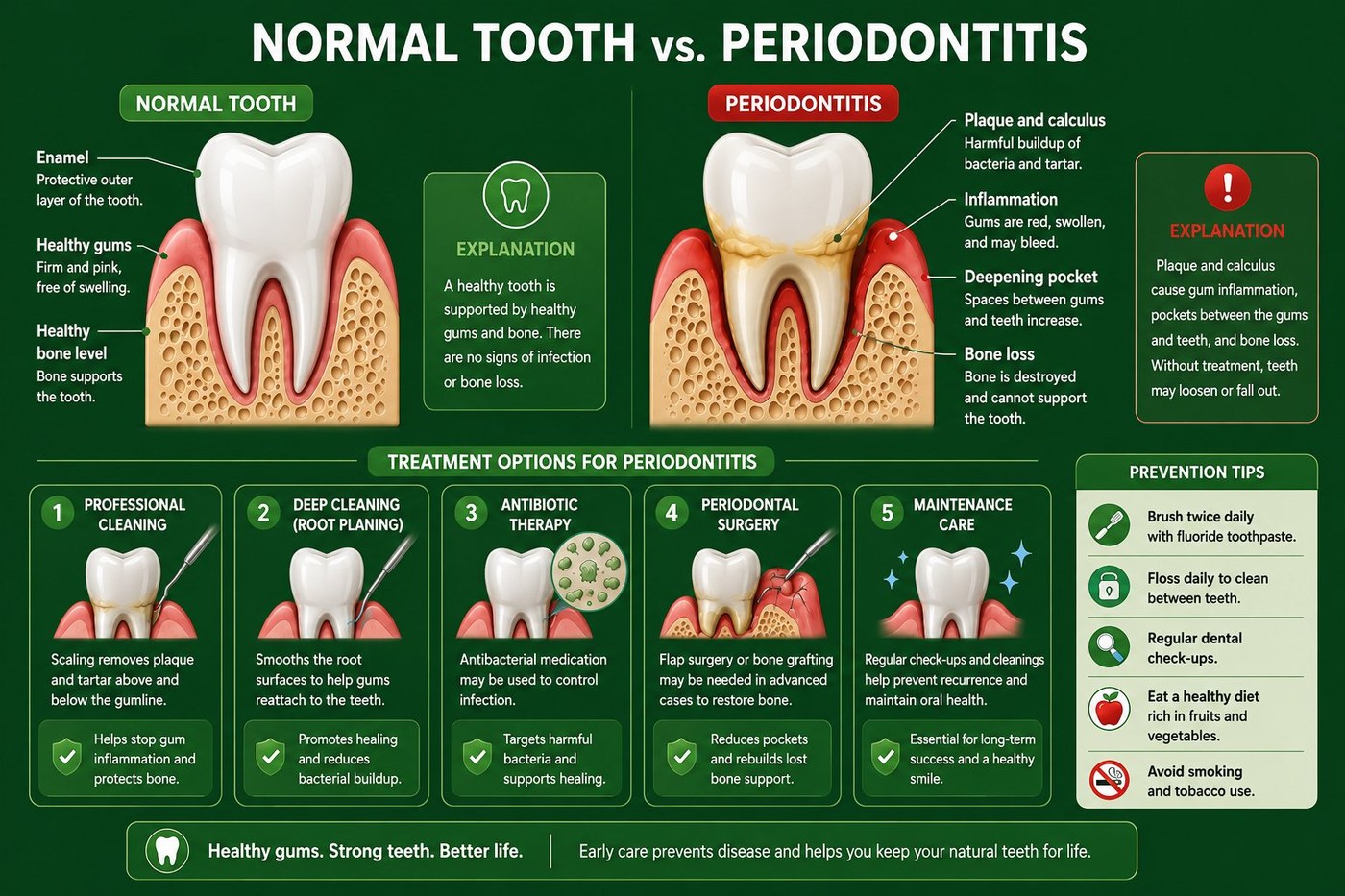
Comparison of a normal healthy tooth versus periodontitis, with treatment and prevention tips

Warning signs

  • Gums that bleed when brushing
  • Red, swollen or tender gums
  • Persistent bad breath

The reassuring part

Caught early, gum disease is very treatable. Good daily cleaning plus professional cleaning at the practice keeps your gums healthy and your teeth secure.

Professional cleaning +

A professional clean (sometimes called a scale and polish) removes hardened plaque and tartar that everyday brushing can't shift.
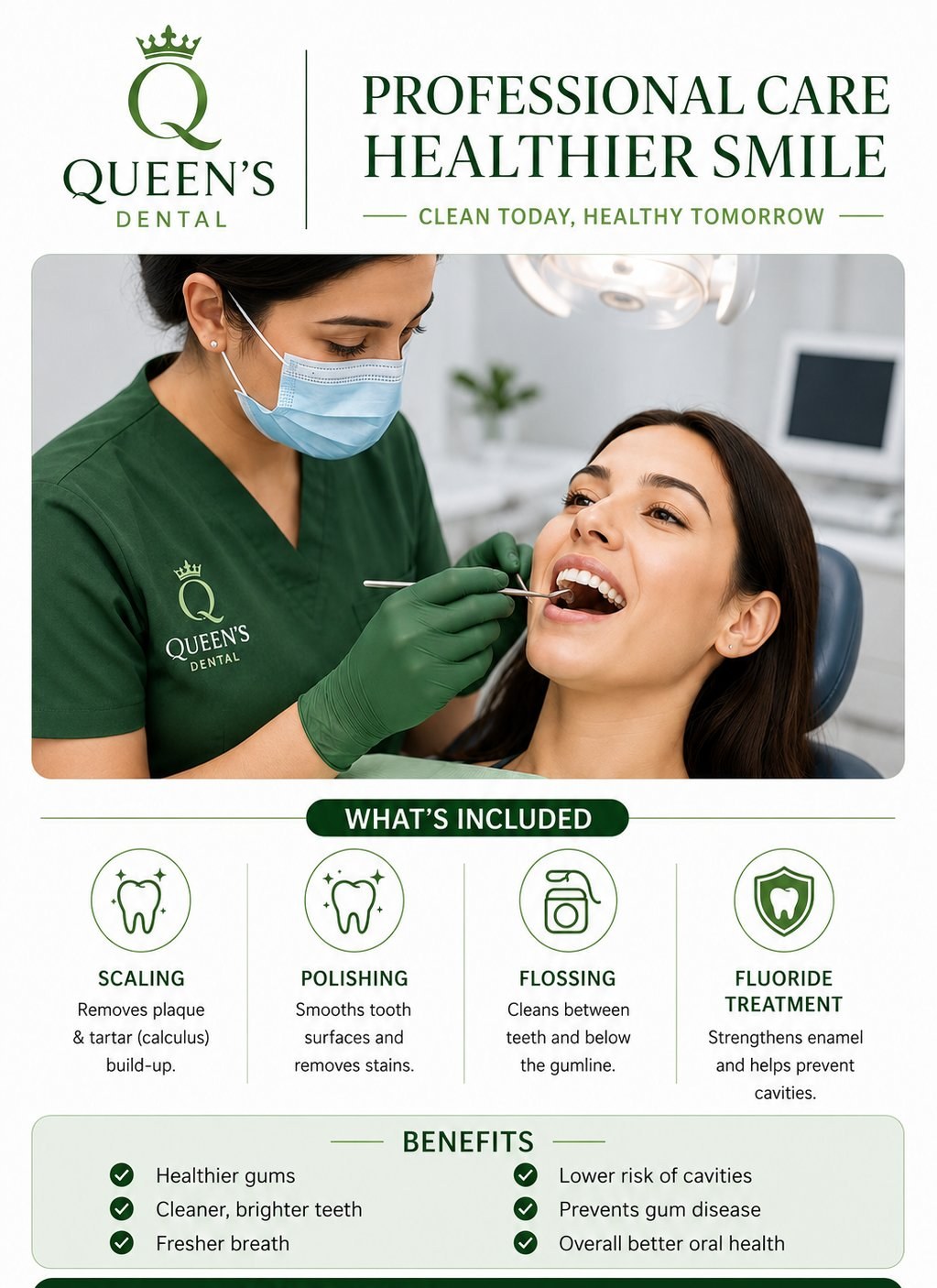
Professional dental hygiene care: scaling, polishing, flossing and fluoride treatment, and the benefits of a clean smile

Why it helps

  • Keeps gums healthy and reduces bleeding
  • Freshens breath
  • Leaves teeth feeling smooth and clean

Orthodontics (Straightening Teeth)

Orthodontic treatment gently moves teeth into a straighter, healthier position. Straighter teeth are easier to clean and can improve both your bite and your confidence. There are two main approaches.
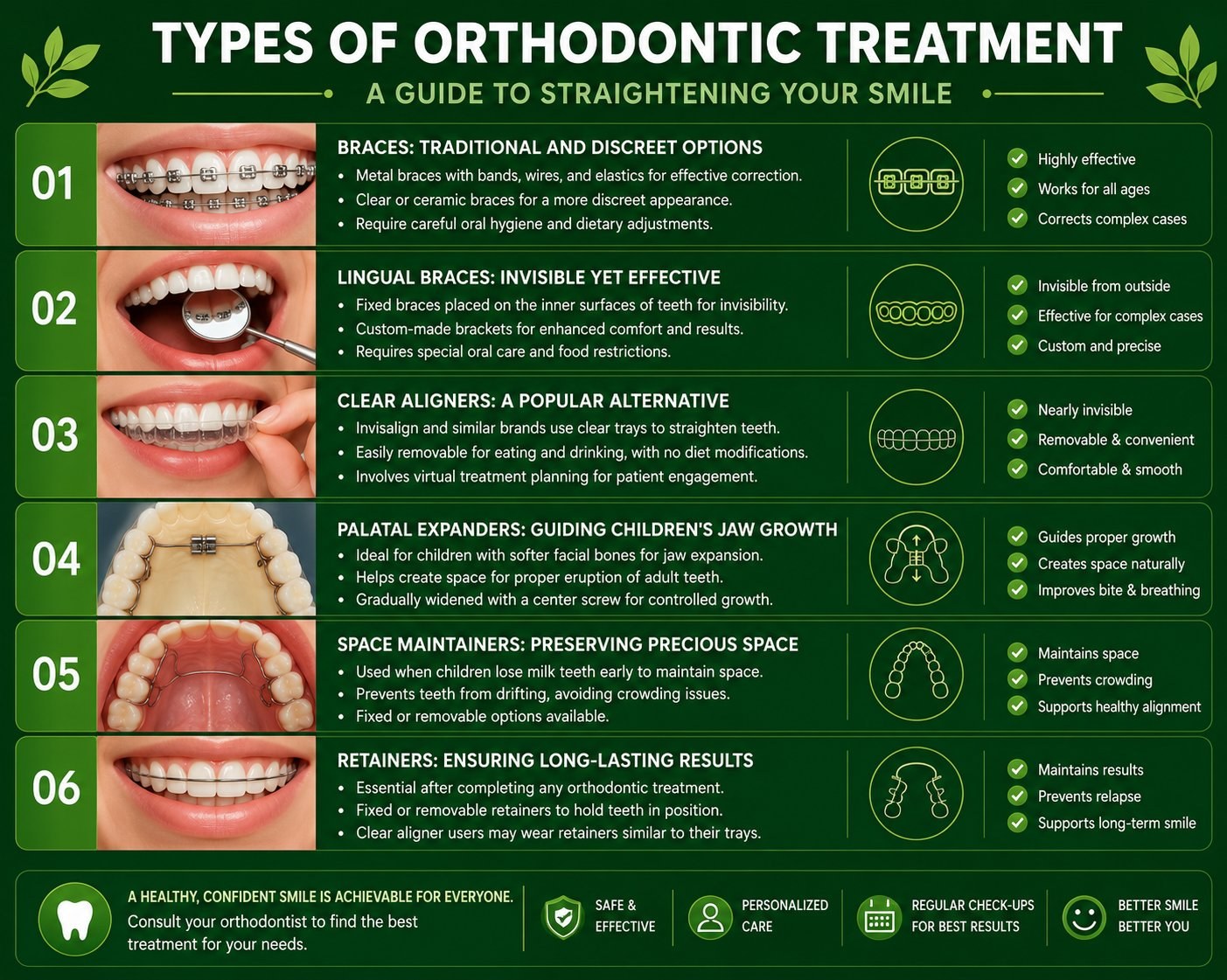
Types of orthodontic treatment: traditional and clear braces, lingual braces, clear aligners, palatal expanders, space maintainers and retainers, with benefits for each
1

Fixed Braces

Brackets and wires

Small brackets are fixed to each tooth and joined by a thin wire that is gently adjusted over time. Because they stay on throughout treatment, fixed braces are very effective, including for more complex cases.

  • Works for simple and complex problems
  • Always working, nothing to remember to wear
  • Tooth-coloured options available for discretion
2

Invisalign & Clear Aligners

Clear, removable trays

A series of clear, custom-made plastic aligners that fit snugly over your teeth and move them little by little. You swap to the next aligner every couple of weeks. They are nearly invisible and can be taken out to eat and clean.

  • Discreet — most people won't notice them
  • Removable for eating and brushing
  • Comfortable, with no wires to rub
Which option is right for me? +

It depends on what needs correcting, your lifestyle and your preferences.

Worth knowing

  • Clear aligners suit mild to moderate cases and people who want a discreet option
  • Fixed braces handle a wider range of problems, including more complex movements
  • Both finish with a retainer to keep your new smile in place

The best way to know is a consultation — we'll assess your teeth and talk you through the realistic options, timescales and costs.

Keeping your smile straight: retainers +

After treatment, teeth naturally try to drift back. A retainer holds them in their new position.

Simple to live with

  • Usually worn at night once treatment finishes
  • Removable or fixed behind the teeth, depending on the case
  • Keep it clean and bring it to your check-ups

Whitening & Aftercare

Tooth whitening +

A safe, gentle way to lighten the natural colour of your teeth, carried out under the supervision of a dental professional.
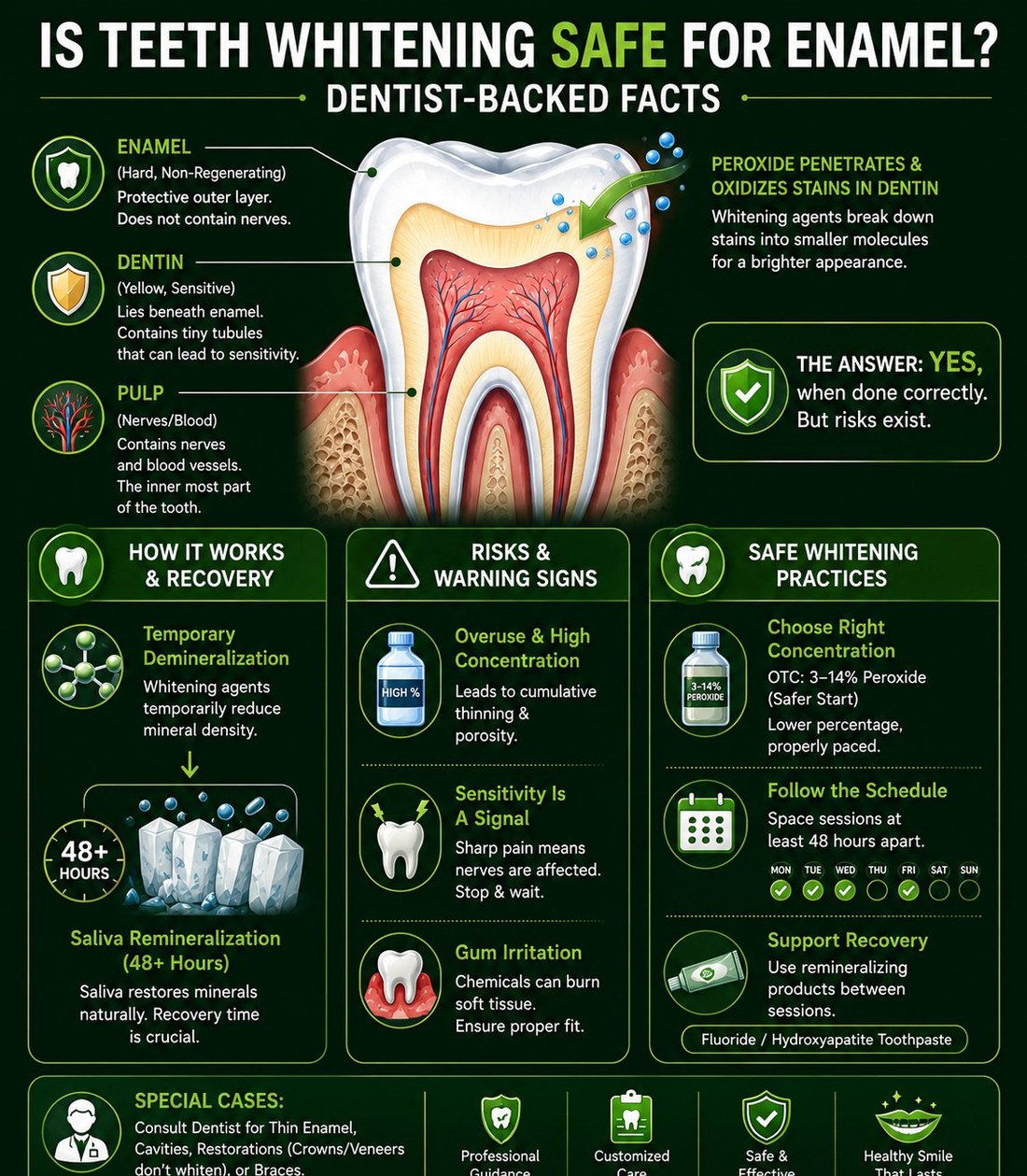
Is teeth whitening safe for enamel: how whitening works, risks and warning signs, and safe whitening practices

Good to know

  • Legally must be carried out or prescribed by a dentist
  • Custom trays mean even, comfortable results
  • Some short-lived sensitivity is normal and settles quickly
After an extraction or surgery +

A little care in the first day or two helps the area heal smoothly after a tooth is removed.

Helpful steps

  • Avoid rinsing for the first 24 hours, then rinse gently with warm salty water
  • Stick to soft food and avoid the area while chewing
  • Don't smoke — it slows healing
  • Take pain relief as advised if you need it

If you have heavy bleeding, swelling or pain that gets worse rather than better, contact the practice.

Caring for children's teeth +

Healthy habits start young. Looking after baby teeth sets children up for strong adult teeth and happy dental visits.

Simple tips

  • Brush twice a day with a fluoride toothpaste suited to their age
  • Supervise brushing until around age seven
  • Keep sugary snacks and drinks to mealtimes
  • Bring them along to your check-ups so visits feel normal and fun
Dental X-rays +

X-rays let us see between and inside teeth, and below the gum line, to spot problems that aren't visible during a normal examination.

Are they safe?

Dental X-rays use a very low dose of radiation and are taken only when needed to help your care. They're a routine, well-established part of keeping your teeth healthy.

These guides are for general information only and are not a substitute for professional advice. Every patient is different — your dentist will discuss the right options for you at your appointment.